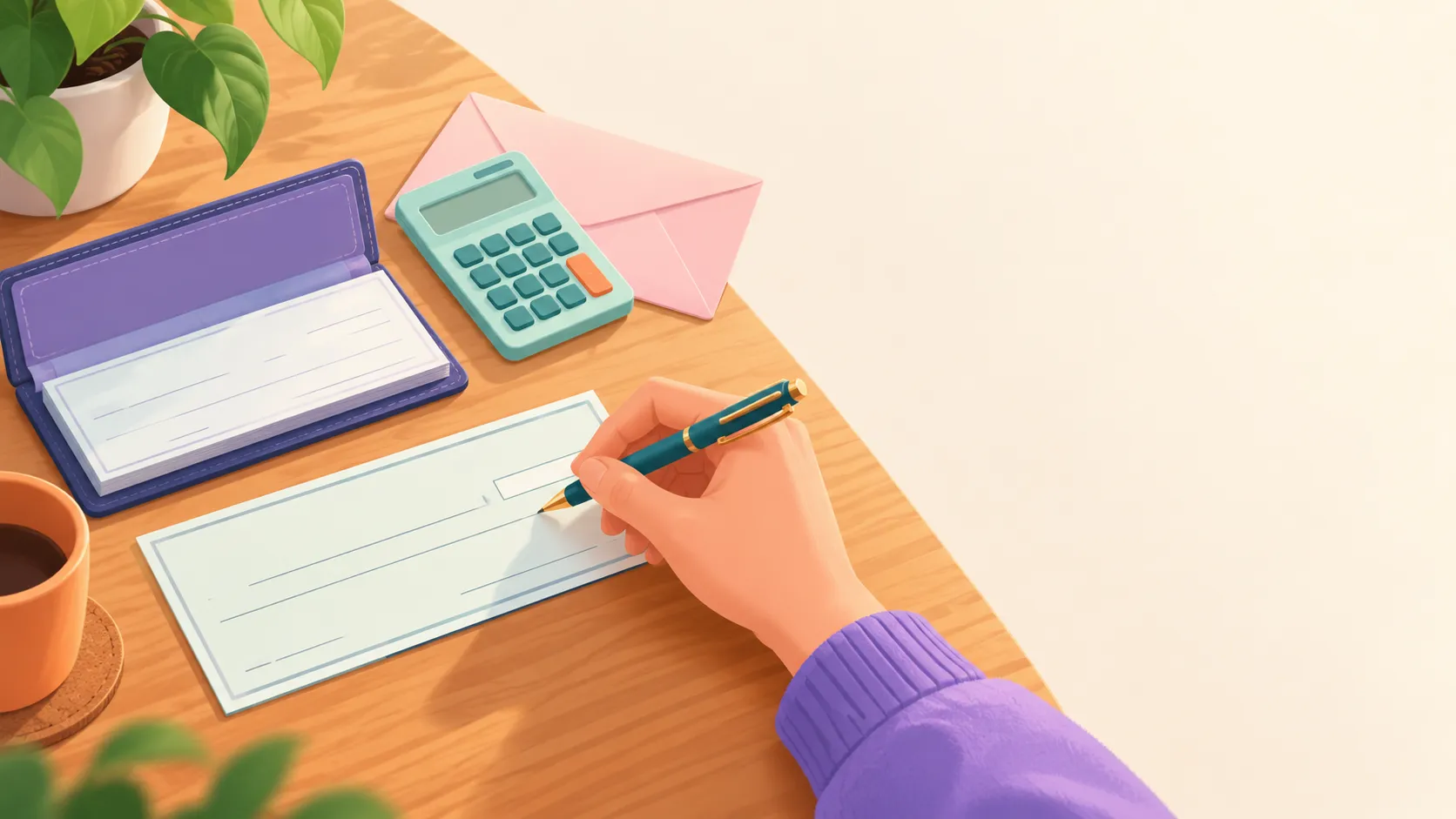
A personal check is a written instruction to your bank to pay someone a set amount from your checking account. Once you know what goes on each line, filling one out takes less than a minute — the diagram above shows a finished example.
Step by Step
- Date — write today’s date on the line in the top-right corner.
- Pay to the order of — write the full name of the person or business you’re paying. Check the spelling; a bank can refuse a check made out to a name that doesn’t match the account.
- Amount in numbers — write the amount in the small box after the
$sign (e.g.125.00). Start right against the$so nothing can be squeezed in front of it. - Amount in words — spell out the same amount on the long line, with cents as a fraction: “One hundred twenty-five and 00/100.” If the two amounts ever disagree, the written amount is the one the bank goes by.
- Memo — optional. A short note about what the payment is for, like “March rent.”
- Signature — sign on the bottom-right line, the same way you signed when you opened the account. A check without a signature isn’t valid.
Tip: Draw a line from the end of the written amount to the word “Dollars.” It fills the empty space so no one can add words after yours.
Common Mistakes
- Writing amounts that don’t match (e.g. “$125.00” in the box but “One hundred fifty and 00/100” on the line). The check may be rejected or paid for the wrong amount.
- Forgetting to sign.
- Using pencil or erasable ink. Always use a pen with permanent ink.
- Leaving the “Pay to” line blank. Anyone holding a blank check can write in their own name.
About Post-Dating a Check
Writing a future date doesn’t reliably stop a check from being cashed early — in the U.S., a bank can pay a post-dated check as soon as it’s deposited unless you’ve formally told your bank not to. Don’t write a check for money that isn’t in your account yet.
If You Make a Mistake
Don’t scribble over it and keep going. Write VOID in large letters across the front, don’t sign it, and start a new check. Record the voided check’s number in your register so your records stay in order.
Warning: A voided check still shows your account and routing numbers. Keep it somewhere safe, or shred it once you’ve recorded it.
Depositing a Check Someone Gives You
Sign the back of the check in the endorsement area (usually marked “Endorse here”). If you’re depositing it — at an ATM, in your bank’s app, or at a branch — writing “For deposit only” under your signature means it can only go into your account if it’s lost. Many banking apps also ask you to add “For mobile deposit” there; follow your bank’s instructions exactly.